
The Delhi government has approved the Delhi EV Policy 2.0, which will phase out fresh registrations of internal combustion engine (ICE) two-wheelers and three-wheelers over the next two years, starting with a ban on ICE 3Ws and N1 category LCVs from January 1, 2027, and ICE 2Ws from April 1, 2028.

Rajesh Exports has vehemently denied allegations of inflated revenues and preferential share placement to LIC, labelling them 'speculative inferences' and affirming its commitment to addressing concerns raised by Sebi.

India's domestic passenger vehicle sales experienced a robust 24.6 per cent year-on-year increase in June, propelled by favourable government policies like income tax relief and repo rate cuts, alongside resilient rural demand, even as global crude oil prices pose potential cost pressures.

Chinese President Xi Jinping has called for global collaboration in Artificial Intelligence development, stating it should be a "symphony" rather than a "solo performance." His remarks came at the World Artificial Intelligence Conference (WAIC) in Shanghai, where 29 countries also signed an agreement to establish the World Artificial Intelligence Cooperation Organisation (WAICO), an independent intergovernmental body headquartered in Shanghai. China also pledged 5,000 AI research projects and training for developing nations.

But when it comes to e2W, China is the dominant player and had grabbed over 76 per cent share of total e2W imports in 2025 with brands like Yadea, NIU and Sunra dominating the market.
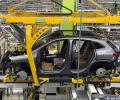
India's total automobile retail sales recorded a significant 9.55 per cent year-on-year growth in May, reaching an all-time high of 25,31,067 units, driven by strong performances in three-wheelers, passenger vehicles, and tractors, despite prevailing heatwave conditions and fuel price pressures.

Ola Electric Mobility Ltd is redirecting 575 crore from its initial public offering (IPO) proceeds, originally earmarked for research and product development, towards debt repayment and organic growth initiatives, signalling mounting pressure on the electric-vehicle maker.
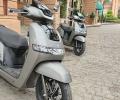
India's two-wheeler market is on the cusp of a significant transformation, with electric scooters projected to surpass motorcycles in volume terms within the next decade, driven by urbanisation, increased female workforce participation, and the accelerating shift towards electrification, according to an Equirus Securities report.

Ola Electric's initial public offering (IPO), of Rs 5,500 crore, is essentially aimed at ensuring the company maintain its top position in the electric two-wheeler segment, with incumbent players TVS and Bajaj Auto giving a fight to the number one player in market share. Most experts and competitors say the amount being raised is in line with the investment required to expand the electric-vehicle (EV) business. There are two discernible trends in the competitive electric two-wheeler market.
Driven by improved customer experience, Ola Electric is witnessing "clear outcomes" in market share from its focused service transformation programme, the company said, as it registered 9,020 units in December, lifting its month-on-month share to 9.3 per cent from 7.2 per cent in November.
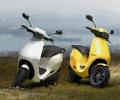
Driven by improved customer experience, Ola Electric is witnessing "clear outcomes" in market share from its focused service transformation programme, the company said, as it registered 9,020 units in December, lifting its month-on-month share to 9.3 per cent from 7.2 per cent in November.

Bajaj Auto, the sole player in India's CNG-powered motorcycle segment, has seen a dramatic drop in registrations for its Freedom 125 CNG bike, from a peak of 12,167 in November 2024 to just 1,211 in May this year, primarily due to reduced price arbitrage between petrol and CNG and growing availability challenges.
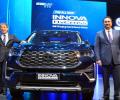
Grant Thornton Bharat's latest survey indicates that hybrids are set to consolidate market share this festive season, bridging the gap between conventional petrol engines and the emerging electric vehicle segment.

Indian stock markets experienced a significant sell-off, with the Sensex tumbling over 1,300 points, driven by escalating crude oil prices due to US-Iran tensions and Prime Minister Narendra Modi's call for austerity measures, which amplified investor concerns about India's economic outlook.

Companies in the fast-moving consumer goods (FMCG) sector are losing favour with equity investors, with their price-to-earnings (P/E) ratio declining to its lowest level in six years, now trading at 38.8 times trailing earnings.
BMW India has outpaced rival Mercedes-Benz India in luxury car registrations for the first quarter of calendar year 2026, driven by new product launches and a growing electric vehicle segment, even as the overall luxury car market remains largely flat.
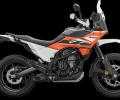
Bajaj Auto reported a significant increase in its consolidated Q4FY26 performance, with profit after tax more than doubling to approximately 3,662 crore, a 103 per cent year-on-year rise, primarily driven by record volumes, an improved product mix, and the strategic consolidation of Bajaj Auto International Holdings AG (BAIHAG).
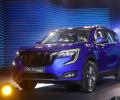
Mahindra & Mahindra (M&M) is largely bullish among analysts following its Q4FY26 results, driven by strong SUV demand, a robust product pipeline, and improving growth visibility across segments, despite near-term margin pressures from rising commodity costs and potential weakness in the tractor cycle.

Tata Motors is the leader in the electric car market with about 62 per cent share.

Lining up its 2030 strategy, Hyundai said it was targeting up to 30 per cent export contribution and over 1.5-fold rise in revenue, to cross the 1 trillion milestone in five years.

'Growth will definitely continue to come most from the sub-four-metre SUV segment, primarily because that is where the heart of economy and affordability is. Naturally, that will keep pushing the share of that segment (in overall PV sales) higher.'

Tata Motors' MD and CEO, Girish Wagh, has identified rising diesel prices as the most significant threat to India's commercial vehicle (CV) industry recovery, despite the sector recently surpassing its pre-FY19 wholesale peak. Diesel costs account for 25-50% of a truck operator's total cost of ownership, making any increase a critical concern for fleet economics.

India's leading passenger vehicle manufacturers are significantly increasing investments and factory capacities, alongside planning major product launches for FY27, driven by strong confidence in sustained domestic demand growth despite global geopolitical tensions and supply chain risks.
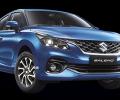
Maruti Suzuki India (MSI) will keep consolidating its existing product line-up, including hatchbacks, while bolstering presence in the fast growing SUV segment to power its way back to 50 per cent market share in the domestic passenger vehicle market, as per a senior company official. The country's largest carmaker, which has seen its market share drop to 43.38 per cent in FY22 from 47.7 per cent in FY21, aims to bring in multiple SUV products with focus on new technologies like hybrid powertrains in order to enhance fuel efficiency, making them comparable or better than diesel-powered models that are currently being sold in the market, especially by its Korean rivals. With no intention of making a comeback in the diesel segment, MSI is also focusing on increasing its play in the CNG segment to bring in additional volumes.

Skoda India is focusing on cleaner fuel options, including CNG and EVs, while compact SUV Kylaq drives volumes, expands first-time buyers and strengthens the brand in India's competitive market

Hero MotoCorp Ltd (HMCL) has been the best-performing auto stock over the last three months, gaining over 17 per cent during this period. Multiple tailwinds, especially on the rural front, are expected to boost its volumes. In addition to the demand drivers, new launches too should help drive growth both in the commuter and premium motorcycle categories.

India's electric passenger vehicle (ePV) market has expanded sharply over the past five years, with registrations rising from just 3,252 units in 2020 to about 170,000 in 2025. Throughout this scale-up, southern states have remained the bedrock of adoption, consistently contributing around one-third of national electric vehicle (EV) registrations - emphasising the region's role as the structural backbone of India's EV transition.

Vinfast sold 137 cars versus Tesla's 109 during the festive months of September and October, as BYD maintained a strong lead with over 1,100 cars sold, according to Fada data.

Maruti Suzuki India (MSIL) has ambitious plans to increase capacity. It is also seeking shareholders' approval for a complex swap transaction, which would acquire Suzuki Motor Gujarat (SMG), a subsidiary of Suzuki Motor Corporation (SMC) through a preferential offer. SMC already holds 56.37 per cent of MSIL's equity.

Despite the ongoing West Asia conflict causing global trade route disruptions, Mercedes-Benz India reports resilient customer demand, particularly for its new electric CLA sedan, though it faces challenges with component supply delays and escalating shipping costs.

A readout by the US said the agreement marked a milestone in the strategic partnership between the two nations to ensure that the foundational elements required for advanced technology and energy are available within trusted networks.

'We serve more than 1.2 billion trips annually and have over 1.5 million active earners each month using the platform.'

India's rapidly ageing truck fleet, with 42% of vehicles over 12 years old, is set to trigger a replacement-driven growth of 3-5% annually over the next five years.
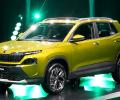
Skoda Auto India, the Czech carmaker that has recently found success with its compact SUV Kylaq, says it remains committed to developing a fully localised electric vehicle (EV). The EV will be manufactured at its Chakan facility for both Indian market and exports.

Tata Motors' commercial-vehicle (CV) business reported a 48 per cent year-on-year decline in net profit to Rs 705 crore in Q3FY26, even as profit before tax (PBT) rose 65 per cent to Rs 2,568 crore.

The share of first-time luxury customers in BMW's portfolio has risen sharply -- from around 43 per cent in 2024 to nearly 49 per cent in 2025. In some models, the figure is even higher.
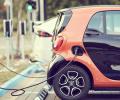
Despite the benefits of hybrid technology, a lack of government backing and few launches have kept the segment from gaining ground.
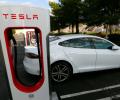
The US carmaker's entry into India is expected by the last quarter of the current financial year.

Czech carmaker Skoda plans to bring more of its global nameplates into the Indian market as it looks to cater to a diverse set of customers, according to a senior company executive. The company, which now sells products in India ranging from over Rs 7 lakh to upwards of Rs 40 lakh, however, has no immediate plans to introduce electric cars in the country.

Retail sales of electric passenger vehicles (ePVs) nearly doubled in July 2025, surging 93 per cent year-on-year (Y-o-Y) to 15,528 units, even as overall passenger vehicle (PV) retail volumes declined marginally. In contrast, electric two-wheeler (e2W) sales dropped by 4.3 per cent to 102,973 units, according to the Federation of Automobile Dealers Associations (Fada) data.
